Darknet Markets 2026:
The dark web is part of the deep web but is built on darknets: overlay networks that sit on the internet but which can't be accessed without special tools or software like Tor. Tor is an anonymizing software tool that stands for The Onion Router — you can use the Tor network via Tor Browser.
| Darknet Market | Established | Total Listings | Link |
|---|---|---|---|
| TorZon Market | 2022 | 140+ | Onion Link |
| Nexus Market | 2024 | 600+ | Onion Link |
| Abacus Market | 2022 | 100+ | Onion Link |
| Ares | 2026 | 100+ | Onion Link |
| Cocorico | 2023 | 110+ | Onion Link |
Updated 2026-10-26
How Multisig Escrow Makes Darnet Drug Trade Safer for Buyers and Sellers
The Nexus darknet marketplace enhances transactional security for its users by implementing a multi-signature escrow system. This technical solution directly addresses the core issue of trust in peer-to-peer commerce. In a standard transaction, funds are held by a neutral third party, the escrow, until the buyer confirms satisfactory receipt of the product. The multi-signature protocol requires more than one private key to authorize the release of these funds.
Typically, three keys are involved:
one held by the buyer,
one by the vendor,
and one by the marketplace escrow service. To release payment, at least two of these parties must agree. This structure effectively prevents common fraud scenarios. A vendor cannot receive payment without the buyer's confirmation of delivery, eliminating the risk of losing funds for undelivered goods. Conversely, a dishonest buyer cannot falsely claim non-receipt to trigger an automatic refund, as the vendor can dispute the claim with evidence, requiring marketplace mediation.
The system automates trust, reducing reliance on personal reputation alone and creating a balanced, self-enforcing agreement. For the buyer, it provides a secure mechanism to ensure value is received before funds are permanently transferred. For the vendor, it guarantees payment upon fulfillment of their obligations, provided they can supply proof. This technical framework establishes a predictable and secure trading environment, which is a fundamental requirement for consistent marketplace activity. The escrow process becomes a transparent and neutral arbiter, facilitating smoother and more reliable transactions for all participating parties.
How Escrow Makes Buying and Selling on the Darknet Safe
The multisignature escrow system is the operational foundation for trust on Nexus. This mechanism acts as a neutral third party for every transaction, holding the buyer's cryptocurrency in a secure, multi-key wallet until the order is fulfilled. Neither the buyer nor the vendor can access these funds alone, which requires a predetermined set of approvals to release payment. This structure directly addresses the inherent uncertainty of anonymous commerce by aligning the incentives of both parties towards a successful exchange.
For the buyer, the system provides a powerful guarantee. Funds are only released after the product has been received and verified, eliminating the risk of losing money to a fraudulent vendor. The vendor, in turn, gains confidence that the payment is secured and guaranteed before they dispatch the product, protecting them from scams. This creates a balanced environment where both participants can engage with reduced anxiety, knowing the platform's protocol enforces fair play. The escrow transforms a potentially risky transaction into a predictable, secure process.
Trust is further amplified by the integration of the escrow system with the vendor rating and feedback infrastructure. A vendor's reputation is built over countless transactions that successfully pass through escrow. Positive feedback, which can only be left after the escrow is closed, serves as a public and verifiable record of reliability. Buyers can make informed decisions by reviewing a vendor's history, seeing their completion rate, and reading detailed comments about product quality and shipping. This transparent feedback loop, backed by the immutable security of escrow, allows trustworthy vendors to flourish and establishes a self-regulating community standard.
The combined effect of these systems is a marketplace where security is procedural, not just promised. The escrow handles the financial risk, while the reputation system manages the qualitative assessment. Together, they build a framework of cryptographic trust that replaces the need for personal familiarity or external enforcement, making the darknet drug trade a structured and secure commercial environment.
How Vendor Ratings Make Darnet Drug Shopping Safer
The vendor rating system on Nexus darknet functions as a continuous, community-driven audit. Each completed transaction allows a buyer to leave detailed quantitative and qualitative feedback, which is permanently attached to the vendor's profile. This creates a transparent reputation economy where historical performance is the primary metric for trust.
A vendor's score is not a simple average. The system weighs more recent feedback more heavily, quickly reflecting any change in product quality or shipping reliability. Detailed comments often specify packaging stealth, product purity, and communication speed, providing future buyers with data points far beyond a star rating. This mechanism effectively outsources quality assurance to the user base, creating a self-regulating environment where poor service or misrepresented products lead to rapid reputational decline and loss of business.
The feedback loop is secured by the underlying multi-signature escrow. Because funds are held in escrow until order completion, buyers cannot be coerced into leaving positive reviews, and vendors are incentivized to resolve disputes amicably to receive payment. This financial framework ensures the feedback's authenticity, making it a reliable resource for risk assessment. New vendors operate under increased scrutiny, often starting with smaller transactions to build a credible history, while established vendors with high ratings benefit from greater buyer confidence and sales volume.
Clear Listings Build Trust on the Darknet
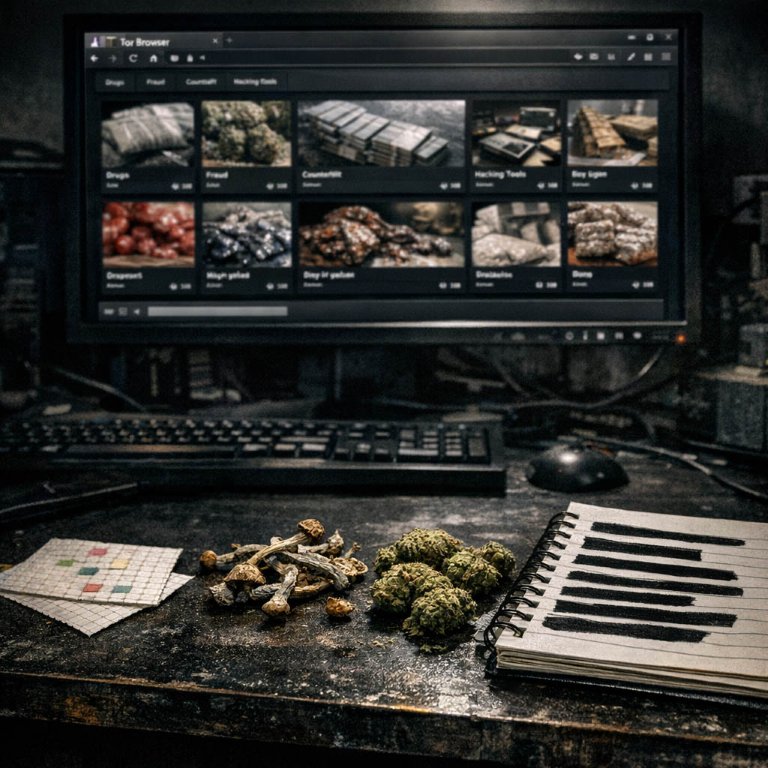
Product listings on the Nexus darknet function as a primary mechanism for risk mitigation and informed decision-making. A detailed listing provides a factual basis for the transaction, reducing ambiguity and setting precise expectations. Listings typically include high-resolution photographs from multiple angles, exact weight measurements, and specific chemical composition or strain details. This level of transparency allows a buyer to assess quality and authenticity before any funds are committed, directly supporting the security framework established by multi-signature escrow.
The information architecture of a listing is standardized, often featuring:
- Purity percentage or lab test results, when available.
- Exact quantity and unit price, with bulk discounts clearly stated.
- Country of origin and shipping methods.
- Explicit packaging procedures for stealth and security.
The escrow system reinforces this dynamic. Since funds are held in a 2-of-3 multi-signature wallet until the buyer confirms satisfactory receipt, a vendor's reputation and financial success depend on the product matching its description. A misleading listing increases the likelihood of a dispute, during which a trusted third party can adjudicate based on the listing's explicit promises. Therefore, the clarity of the product listing is not merely informational but a integral component of the trust and security model, enabling efficient and secure transactions by aligning vendor success with accurate representation.
Reliable Access for Safe Commerce on the Darknet
Platform stability is a foundational requirement for secure commerce on any darknet. The Nexus platform achieves this through a redundant server infrastructure and robust anti-DDoS protection, ensuring it remains online and accessible. This consistent uptime is critical for the security model, as it allows all parties to reliably engage with the escrow process and trust systems without interruption.
A stable platform directly supports the multi-signature escrow mechanism. Transactions cannot be finalized or disputed if the site is unavailable. Nexus's operational resilience guarantees that buyers and sellers can complete the agreed-upon cryptographic steps to release funds, which are held securely in escrow until both parties confirm satisfactory delivery. This prevents fraud by either side, as the system's rules are enforced by its continuous availability.
This stability also underpins the vendor rating and feedback ecosystem. A consistently accessible platform allows for the accumulation of long-term, verifiable transaction histories. Buyers can make informed decisions based on a vendor's established reputation, creating a self-regulating community standard. The platform itself becomes a neutral, reliable record-keeper for these trust signals.
Furthermore, stable access ensures that layered encryption for communications and financial data is always active, protecting user privacy. The streamlined transaction process, from browsing clear product listings to finalizing a sale, depends entirely on the platform's ability to provide a predictable and secure environment for every interaction.
How Encryption Makes Buying on the Darknet Safe and Private
The layered encryption model is fundamental to privacy on Nexus and similar darknets. It operates on the principle that no single point of failure should compromise a user's identity or transaction details. The process begins with the user's connection to the network itself, which is typically routed through Tor or an equivalent service, obscuring the originating IP address. This initial layer ensures that a user's physical location and network identity are separated from their marketplace activity.
On the platform, communication employs end-to-end encryption (E2EE). All messages between buyers and vendors are encrypted with keys that only the communicating parties possess. This means that even if the marketplace's servers were compromised, the content of the messagesshipping addresses, specific product discussions, or dispute detailswould remain unreadable to an interceptor. The marketplace acts only as a relay for this encrypted data, not as a holder of the decryption keys.
This encryption extends directly to the multi-signature escrow process. The financial terms and release conditions of an escrow contract are secured within the encrypted communication channel. When funds are placed in a 2-of-3 multisig wallet, the transaction is recorded on the blockchain, but its purpose is masked. The blockchain only shows that coins moved between anonymous wallets, not that they were for a specific listing or tied to a marketplace account. The final authorization to release funds requires digital signatures from two of the three parties (buyer, vendor, marketplace), which are also executed through encrypted commands, ensuring the financial agreement is both tamper-proof and private.
The synergy between encryption and vendor systems enhances security further. A vendor's reputation score and feedback history are public data points that help a buyer make a risk assessment without needing to expose private inquiries. This reduces unnecessary sensitive communication. A vendor with a long history of completed multisig escrows demonstrates a consistent ability to finalize transactions securely within the encrypted framework, proving operational reliability. The system creates a environment where privacy technologies and economic incentives align to foster secure and discreet trade.
A Secure and Smooth Way to Buy on the Darknet
The transaction workflow on Nexus darknet is engineered for operational security and efficiency. A buyer selects a product and funds a multi-signature escrow wallet, which requires two of three possible keys to release payment. This creates a neutral holding area for the cryptocurrency.
The vendor ships the product upon seeing the secured funds. After receiving the order, the buyer can release the escrow, completing the sale. If a dispute arises, a trusted third-party moderator from the community can be brought in to review the evidence and cast the deciding key vote, ensuring a resolution mechanism that protects both parties without external interference.
This integrated system reduces transactional friction. The escrow mechanism eliminates the need for blind trust, while the structured dispute process prevents conflicts from stalling transactions. The result is a predictable and secure exchange environment where vendor reputation, built through consistent performance and positive feedback, becomes the primary currency for trust, directly facilitating smoother and more reliable trade.
How the Community Keeps Darknet Markets Safe
The operational security of a darknet marketplace like Nexus is not solely a technical achievement but a social one. While multi-signature escrow and vendor ratings provide the structural framework for secure transactions, it is the engaged user community that actively enforces and refines these standards. This collective vigilance transforms static rules into a dynamic, self-regulating environment where security is continuously validated by peer experience.
Vendor trust is not automatically granted by the platform but is earned and sustained through consistent performance recorded in public feedback. Each transaction review and detailed rating contributes to a transparent reputation system. This system allows buyers to make informed decisions based on a vendor's historical reliability, creating direct economic incentives for vendors to maintain high standards in product quality and shipping discretion. A vendor with a strong reputation has a valuable asset to protect, which aligns their interests with the marketplace's stability.
The community's role extends beyond simple feedback. Forum discussions and review channels serve as early warning systems, where users can:
- Report potential scam listings or phishing attempts.
- Discuss shipping methods and stealth innovations.
- Analyze changes in product quality or vendor behavior.
- Share knowledge on operational security practices for both buyers and sellers.
This open exchange of information creates a form of distributed due diligence, where the collective intelligence of the community identifies and mitigates risks that no automated system could catch alone. A new vendor is scrutinized, and an established vendor is held accountable, not just by the platform's administrators but by thousands of informed participants. This environment makes the drug trade on Nexus more secure by embedding trust within a verifiable, community-driven process, where security is a shared responsibility reinforced by every successful transaction.